
Low-Water Landscaping in Flagstaff Doesn't Have to Mean a Yard Full of Rock
When you hear the words low-water landscape, what comes to mind?
For a lot of homeowners, it's something like this:
Rock. More rock. Maybe a plant or two. And then some more rock.
But creating a water-conscious landscape doesn't mean giving up everything that makes an outdoor space feel alive.
In fact, some of our favorite Northern Arizona landscapes combine thoughtful planting, natural materials and efficient irrigation to create spaces that feel lush and inviting without relying on excessive water.
Start With the Right Plants

Water-wise landscaping isn't about eliminating plants.
It's about choosing them intentionally.
Plant selection is especially important in Flagstaff because gardening here is very different from gardening in lower-elevation Arizona. University of Arizona Extension places Flagstaff around USDA Zone 6a and notes that our high-elevation conditions require plant material capable of handling significantly colder winter temperatures.
Choosing plants suited to Northern Arizona can reduce frustration and create a landscape that is easier to care for long-term.
At Agassiz, our planting designs tend to emphasize hardy shrubs, perennials and trees suited to local conditions rather than forcing plants into environments where they're unlikely to thrive.

Use Plants Where They Make the Biggest Impact
Not every square foot of a yard needs the same treatment.
A thoughtful design might concentrate planting:
Near gathering areas
Along walkways
Outside frequently viewed windows
Around patios
Where shade or privacy is needed
At transitions between different landscape areas
This allows greenery to make a major visual impact without necessarily filling the entire property with high-water plant material.
Let Hardscape Do Some of the Work
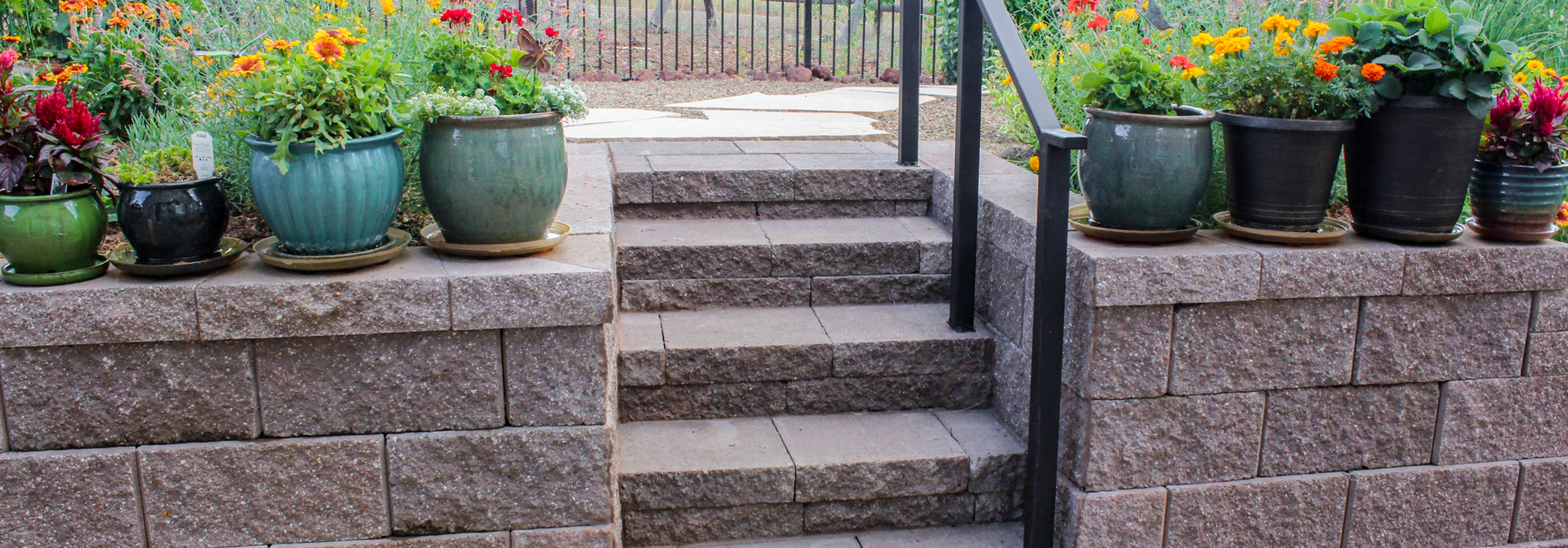
Pavers, natural stone, boulders, gravel and other hardscape materials can add structure and interest without requiring irrigation.
The key is balance.
A patio surrounded by nothing but rock can feel stark.
That same patio softened with grasses, shrubs, trees and strategically placed perennials can feel completely different.
The goal isn't necessarily to use fewer landscape elements — it's to choose elements that work well together.

Irrigation Matters Just as Much as Plant Selection
Even a great plant palette can be inefficient if the irrigation isn't designed properly.
Drip irrigation allows water to be directed where plants actually need it rather than watering large areas indiscriminately.
Proper scheduling matters too.
Trees, shrubs, lawns and perennials have different root depths and watering needs, which is why a thoughtful irrigation plan
should match the landscape rather than treating every plant identically.
Consider Replacing Lawn You Don't Actually Use
Lawns absolutely have a place in landscape design.
If your kids play on it, the dog uses it or your family loves having a soft green gathering space, lawn can be incredibly functional.
But if an area of turf exists simply because it has always been there, it may be worth reconsidering.
Flagstaff's current Low Water Landscape Program even offers eligible participants a $1-per-square-foot rebate for converting lawn to low-water landscaping, subject to program requirements.
Instead of asking, “Should we get rid of grass?” we prefer to ask:
“What purpose is this part of the yard serving?”
That's a much better starting point for good design.
Water-Wise Can Still Be Beautiful

A Northern Arizona landscape can be responsible with water and still include:
Color.
Texture.
Shade.
Seasonal interest.
Trees.
Flowers.
Places to gather.
And plenty of life.
The two ideas aren't opposites.
If you're considering redesigning your Flagstaff landscape, explore our landscape portfolio for inspiration, or learn more about how our landscape design process works.


Comments